


Sushi vs Sashimi vs Nigiri:...
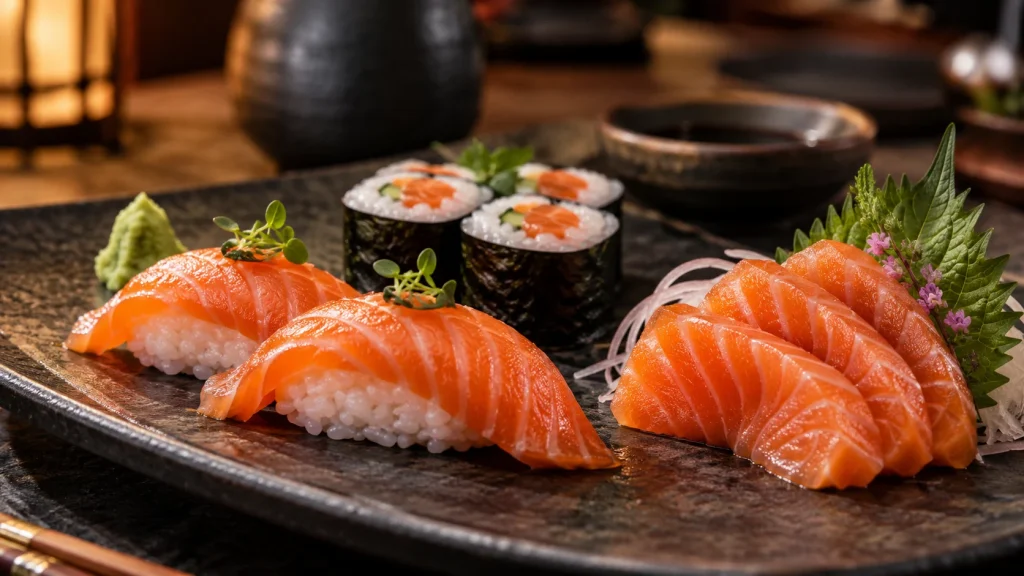
The three words are not three versions of the same thing. Sushi is a category. Nigiri is one type of sushi. Sashimi is not sushi at all.What separates them is rice. Sushi means vinegared rice, so anything built on it qualifies and anything without it does not. Nigiri is a hand-pressed finger of rice with fish laid over it. Sashimi is fish sliced and served alone. The name sashimi carries the clearest trace of why it stands apart. It is usually read as a pierced body, and the common explanation is practical: once a fillet was skinned, the fish’s own fin was pinned to it so the kitchen could still tell what it was. The identity of the fish was the whole point, and it still is. This guide explains each of the three and, more usefully, how each one is meant to be eaten. The difference in one table Rice? What it is How it is eaten Sushi Yes, always The category. Any dish built on vinegared rice, including nigiri, maki, gunkan and chirashi Depends on the form Nigiri Yes A pressed finger of rice with a slice of fish over it, often with wasabi between the two Fingers or chopsticks, inverted, in one bite Sashimi No Fish sliced and served without rice, with no cooking and no assembly Chopsticks, dipped lightly in soy The practical consequence is that sashimi is not an alternative to sushi so much as a separate course. It arrives early, while the palate is clean, and it is the dish most easily spoiled by anything eaten before it. Nigiri: the grasped one Nigiri comes from a verb meaning to grasp or squeeze. The whole dish is named after the hand movement that makes it, which tells you where the difficulty lies. Two ingredients, no sauce, and a piece of rice that has to hold together between the fingers and then come apart in the mouth. The form belongs to Edomae sushi, meaning in front of Edo, the old name for Tokyo. The fish came from the bay, and because there was no refrigeration it was almost never served raw and untreated. It was cured in kelp, marinated in soy, salted or lightly boiled before it ever reached the rice. That history still governs how nigiri is served. A chef seasons the piece before it leaves the counter, so by the time it reaches you the decisions have been made. This is the reason the dipping advice further down is narrower than most people expect. Nigiri is one of several forms of sushi rather than a synonym for it. If you want the full set — maki, gunkan, temaki, chirashi and the rest — our guide to the different types of sushi covers the taxonomy properly. Sashimi: the cut one If nigiri is named for a hand movement, sashimi is named for a blade. There is a second explanation for the word beyond the pinned fin, and it is worth knowing: the obvious verb would have been kiru, to cut, but cutting carried associations in samurai-era Japan that nobody wanted at a table. Sashi was the safer word. What survives is a dish with nowhere to hide. No rice to balance it, no seasoning applied in advance, no cooking. Sashimi is the quality of the fish and the handling of the knife, and almost nothing else. The knife work is not decorative. The angle and thickness of a slice change how the flesh sits on the tongue, so a firm white fish is cut thin and something fatter is cut thicker. A chef choosing those cuts is making a decision about texture before you have tasted anything. How to eat each one Nigiri. Fingers are correct, and easier than chopsticks for a piece that is built to be lifted. Turn it so the fish, not the rice, meets your tongue. If you are dipping, dip the fish side only: rice behaves like a sponge, and a piece that has soaked up soy will fall apart on the way to your mouth and drown everything the chef balanced. Eat it in one bite, straight away. The rice is served close to body temperature and begins to tighten within a minute or two. Sashimi. Chopsticks, always. Soy is more freely used here than with nigiri, because nothing has been seasoned in advance and there is no rice to ruin, but a light dip is still better than a soak. Take a slice at a time rather than stacking them. Maki and rolls. Chopsticks, and whole rather than bitten in half, which is the quickest way to make a roll disintegrate on the plate. Across the meal. Move light to rich: white fish, then shellfish, then the oilier fish, then anything seared or marbled. Richness coats the palate, so a piece of mackerel eaten before a piece of sea bream will flatten the bream entirely. Pickled ginger is a cleanser to take between pieces, not a topping to put on them. How to eat sushi with wasabi The habit of stirring wasabi into a dish of soy until it goes grey is the one worth dropping, and there is a reason for it beyond etiquette. Wasabi’s heat is volatile. The compound responsible rises into the nose rather than sitting on the tongue, which is why the burn is sharp, brief and nasal rather than lingering like chilli. Dissolve it in liquid and you lose a good part of it before the food arrives. You end up with cloudy, slightly bitter soy and a flattened version of the thing you wanted. On nigiri, a chef has usually already placed a trace between the fish and the rice. It does not need any more, and adding some is a quiet comment on the kitchen. On sashimi, put a small amount directly onto the slice rather than into the dish. One further note. Most wasabi served outside Japan is horseradish, mustard and green colouring rather than the rhizome itself,
Different Types of Sushi Explained:...
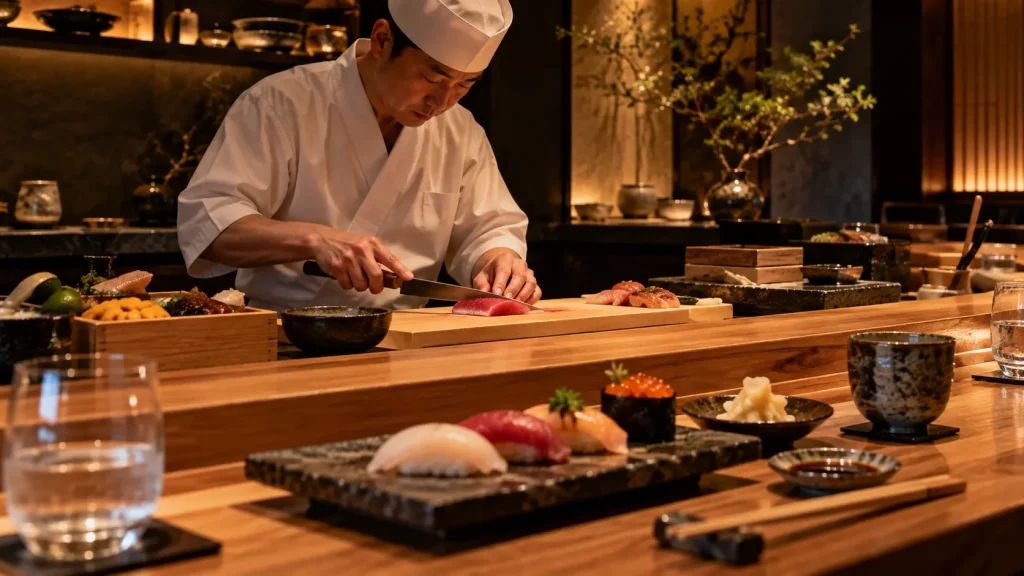
Worldwide, sushi chefs call the rice shari, a word taken from the Buddhist term for the cremated relics of the Buddha, which the small white grains were thought to resemble. It is an unusual name for the most ordinary thing on the plate. It also tells you exactly where a chef’s attention is supposed to go, and it is the reason the whole menu makes sense once you stop looking at the fish. Sushi is defined by its rice, not by its fish. Any dish built on vinegared rice is sushi, and the different types of sushi take their names from how that rice is shaped, wrapped or served. The main types of sushi are nigiri, gunkan, maki, temaki, chirashi, oshizushi and inarizushi. Sashimi, despite sitting beside them on almost every menu, contains no rice and is not sushi at all. This guide explains each one, what to expect when you order it, and how to eat it properly. Sushi means the rice The word sushi comes from an old Japanese adjective meaning sour, and it describes the rice rather than anything placed on top of it. Seasoned with vinegar, salt and a little sugar, that rice is called shari. The fish or other topping is the neta. The method began as preservation. In narezushi, fish was packed into fermenting rice for months and the rice was then thrown away. By the Edo period, cooks had found that vinegar produced a comparable sourness in minutes, and the food stalls of Tokyo started serving the rice and the fish together. This is the single most useful thing a beginner can know. If a dish has shari, it is sushi. If it does not, it belongs to another part of the meal. The types of sushi, by name These are the types of sushi names you will meet most often on a Japanese menu. Name What it is Nigiri A hand-pressed finger of shari with a slice of fish laid over it, usually with a trace of wasabi between the two Gunkan A band of nori wrapped around shari to form a small cup, holding something loose such as roe or sea urchin Maki Rice and filling rolled inside nori, then cut into rounds Temaki A cone of nori hand-rolled around rice and filling, eaten straight away Chirashi Sliced fish and garnishes scattered across a bowl of shari Oshizushi Rice and topping pressed together in a wooden mould, then cut into blocks Inarizushi Shari spooned into a pouch of sweet fried tofu Nigiri is where a chef has nowhere to hide. Two ingredients, no sauce, and a piece of rice that has to hold its shape between the fingers and then collapse in the mouth. Pressure, temperature and the angle of the knife account for nearly all of the difference between good nigiri and forgettable nigiri. Types of sushi roll explained Sashimi is fish sliced and served without rice. The name refers to the cutting, and the dish is judged almost entirely on the quality of the fish and the handling of the knife. It appears next to sushi on menus, including ours, because the two draw on the same deliveries and the same preparation. They are still separate things, and knowing which is which will save you a small amount of embarrassment at the table. You can see how both are set out on the Satori menus. Sashimi is not sushi Maki is the category; the types of sushi roll within it are separated by thickness and by where the nori sits. Hosomaki: a thin roll, nori on the outside, one filling, cut into six. Tuna or cucumber are the classics. Futomaki: a thicker roll with several fillings, cut into larger rounds. Uramaki: inside-out, with the rice on the outside and the nori hidden within. The California roll is the best-known example. Temaki: the cone, rolled to order and eaten in the hand before the nori softens. Uramaki is worth a note, because it is where a lot of confusion starts. It was developed for American diners who were unused to seaweed, and it carried the sauced, deep-fried, many-ingredient roll into sushi menus worldwide. A Japanese roll is usually the opposite: one or two ingredients, precisely cut, with nothing added to cover them. The restraint is the point. Why the rice is the difficult part Fish can be bought. Rice has to be made, every service, and it is where most sushi quietly fails. Cooked rice is turned out into a hangiri, a wide wooden tub, and the seasoned vinegar is cut through it with the edge of a flat paddle rather than stirred. Stirring breaks the grains. The wood draws off steam as the rice is fanned, leaving each grain separate and faintly glossy. It is then held at hitohada, skin temperature, for as long as service allows. Cold shari is the most common fault in a sushi restaurant and the easiest to notice: the rice tightens, the fat in the fish stops softening against it, and the piece arrives as two ingredients rather than one. Edo-period chefs worked with akazu, a red vinegar made from aged sake lees, which tinted the rice amber and carried more depth than the clear rice vinegar that later replaced it. Some kitchens have gone back to it. Many also brush the fish with nikiri, a reduced soy glaze, which is why a piece that arrives already glazed needs no soy at all. How to order and eat it Work from light to rich. White fish first, then shellfish, then the oilier fish, then anything seared or heavily marbled. Richness coats the palate, so a piece of mackerel eaten before a piece of sea bream will flatten the bream. Eat nigiri as soon as it arrives. Shari is served close to body temperature, and a few minutes on the plate firms the rice and dulls the fish. Fingers are perfectly correct for nigiri, and often easier than chopsticks. Dip the fish, not the